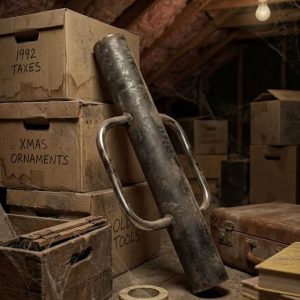
At first glance, an old brass instrument with a curved tube and unusual fittings might look like farm equipment. But if you find one in an old barn, farmhouse, or family collection, you may actually be looking at an **antique horse drencher**—a veterinary tool once used to give medicines to horses and other large animals. Its purpose was simple but important: **“how do you safely get medicine into a powerful animal that doesn’t necessarily want to take it?”**
Horse drenchers were designed to deliver liquid or powdered treatments directly into an animal’s mouth. They existed in different forms for centuries, with one documented example at Michigan State University dating to around **1720**. Later versions were made from brass, iron, pewter, and other metals and could include reservoirs, tubes, plungers, handles, and mouthpieces. They were especially useful when farmers or veterinarians needed to treat digestive problems such as colic.
The unusual shape of a drencher was designed around the difficulty of treating a large, powerful animal. Depending on the model, it might have a metal reservoir, curved delivery tube, plunger, bit-like mouthpiece, or handle. Brass became a popular material because it was durable and easy to shape. However, **“not every antique horse drencher is brass”**, so the material alone cannot confirm what an object is.
If you discover a possible drencher, look for a cylindrical reservoir, long tube, mouthpiece, pumping mechanism, hooks, rings, or signs of repeated use. Maker’s marks, patent numbers, engraved names, and construction details can provide stronger clues. Horse drenchers were produced over a very long period, with known examples ranging from around **1720 to 1960–1975**, so an old-looking instrument should not automatically be labeled Victorian or 19th century.
Today, older drenching tools have largely been replaced by modern veterinary equipment and safer treatment methods. If you find one, avoid aggressive polishing because it may remove valuable patina or damage historical details. Most importantly, **“don’t assume an old drencher is suitable for modern animal use.”** Its real value may be historical rather than practical, offering a fascinating glimpse into how farmers and veterinarians cared for animals before modern technology existed. **“It’s a small reminder of how veterinary medicine evolved—and of the ingenuity people used to care for animals long before today’s technology existed.”**