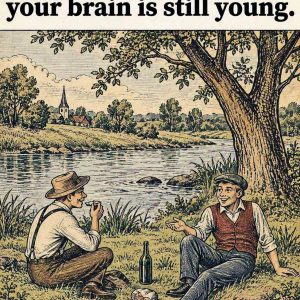
At first glance, a visual puzzle may seem almost too simple to be interesting. You might be asked to find an unusual object, spot a small difference, or identify something that does not belong. Yet even after looking at the image several times, the answer can remain completely unnoticed. The surprising part is that the detail is often visible the entire time.
This experience is closely connected to how human attention works. Researchers in cognitive psychology have studied a phenomenon called inattentional blindness, which occurs when people fail to consciously notice an unexpected object even though it is visible. The eyes may receive the information, but attention is focused somewhere else.
Looking directly at something does not guarantee that you consciously notice every detail around it. Visual attention is selective because the brain must manage an enormous amount of information. If people consciously analyzed everything in their surroundings at once, ordinary activities would become overwhelming. Attention therefore prioritizes information that seems relevant.
Visual puzzles take advantage of this limitation. A designer might place an unusual detail near an edge, make it resemble nearby objects, or hide it among repetitive shapes. If you expect the answer to be in a particular location, you may repeatedly search the wrong area without realizing it. Simply looking harder may not help if your search strategy remains unchanged.
Expectations can also influence what people notice. Someone searching for a color difference may overlook a change in shape or position. Another person may concentrate on the center of an image while ignoring the corners. Changing the way you search can sometimes make the answer suddenly appear.
This is why the phrase “hidden in plain sight” describes many visual puzzles so well. The answer does not necessarily have to be covered or disguised. It can be completely visible while attention remains directed elsewhere. Once a hint points toward it, the image may seem almost impossible to misunderstand.
Importantly, failing to solve a puzzle quickly does not mean someone has poor eyesight or low intelligence. These challenges are generally entertainment, not scientific tests. Research shows that visual awareness has genuine limitations, but puzzle-solving speed cannot diagnose intelligence, personality, or brain health.
The next time a simple visual puzzle seems impossible, try changing your approach. Examine the edges, compare shapes and positions, and question your assumptions about what you are supposed to find. Sometimes the answer was never hidden at all—it was simply waiting for your attention to reach it.