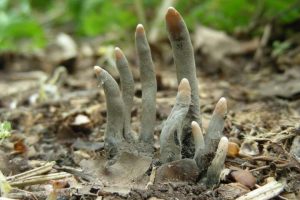
Walking through the woods, you might come across something that looks like a blackened hand reaching out of the ground. Its dark, finger-like shapes emerge from damp leaves, sometimes with pale tips, creating a disturbing sight that could easily make someone think they have discovered something much worse. However, these unusual growths are actually a fungus known as Dead Man’s Fingers, or Xylaria polymorpha.
Unlike ordinary mushrooms, this fungus looks more like burnt sausages or dried roots arranged like human fingers. It typically grows on decaying hardwood trees, including oak, beech, and maple, especially around old stumps and buried roots in shady, damp areas. When young, the fungus is soft and pale, but as it matures, it becomes harder, darker, and almost completely black, sometimes retaining lighter-colored tips.
Despite its frightening appearance, Dead Man’s Fingers are harmless and play an important role in nature. They feed on dead wood rather than living trees, gradually breaking it down and returning nutrients to the soil. This natural recycling process helps support new plant growth and keeps forest ecosystems healthy.
Although the fungus is not considered poisonous, it is extremely tough and bitter, making it unsuitable for eating. It is also safe to touch, although washing your hands after handling wild fungi is always a sensible precaution. Dead Man’s Fingers are most commonly spotted from late summer through fall, and their hardened structures can remain visible long after the growing season.
So, if you ever spot what looks like a skeleton’s hand emerging from the forest floor, there is no reason to panic. You have most likely discovered one of nature’s strangest-looking fungi, quietly helping recycle the forest.