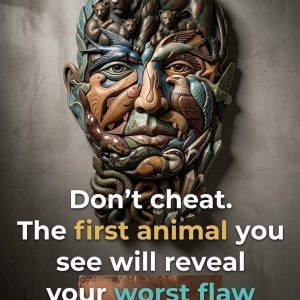
The illusion’s power isn’t in predicting your future; it’s in revealing how quickly your mind grabs meaning from chaos. Faced with the same tangled lines, some people lock onto a coiled snake, others onto a towering elephant, and a few can slide between both with a small shift of attention. That split-second choice feels intimate, even fated, because the descriptions are broad enough to fit almost anyone and flattering enough to feel true.
What actually emerges is a mirror, not a verdict. The image shows how mood, memory, culture, and expectation steer perception long before logic catches up. It hints that your “style” of seeing—detail-first, big-picture, flexible, or stubbornly literal—isn’t a prison but a habit. You can practice stepping back, zooming in, or reconsidering what you thought was obvious. The picture can’t script your destiny, but it can challenge the certainty with which you read the world.