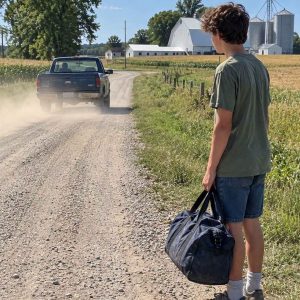
At 10:14 on a Tuesday morning, an employee called security on 84-year-old Earl because his muddy boots had left footprints on the bank’s carpet. He had only come to withdraw $2,000 for a tractor repair, but the young teller judged his worn overalls and old cap, questioned his withdrawal, and suggested he use an ATM. Earl calmly explained that he had been a customer for 61 years, but the teller still refused to help him.
Instead of arguing, Grandpa asked one question: “Is Tom Callahan still in the corner office?” Moments later, the bank president rushed out, recognized him, and immediately confronted the teller. “That man’s name is on the deed to this building,” he explained before apologizing and inviting Earl into his office.
Inside, an old photograph revealed Earl and his wife standing outside the bank in 1986. During Iowa’s farm crisis, the struggling bank had only 30 days to raise $150,000 or risk closing. Earl and his wife mortgaged their 640-acre farm and contributed $86,000 to save it. He also persuaded worried townspeople to keep their savings there, helping the community raise $161,000.
Earl had quietly become the bank’s largest shareholder, owning 31 percent. The teller was devastated when she learned the truth and began apologizing, but Earl refused to have her fired. Instead, he explained that muddy boots represented the hard work that kept the community alive. He even invited her to spend a Saturday working on his farm.
She accepted, learned to operate a combine, and eventually became the bank’s head teller. Today, the bank displays a sign that reads: “Coffee’s free. Boots welcome. Mud is good luck.” Earl still visits wearing his muddy boots, reminding everyone that a person’s appearance never tells the whole story.