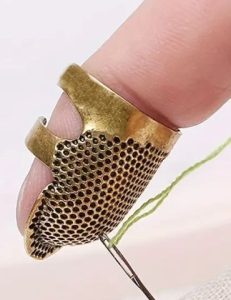
The small, dimpled cup known as a thimble has been an essential part of traditional sewing kits for generations. Worn usually on the middle finger, it protects against painful needle pricks while making hand stitching easier and safer. Its tiny indentations provide a better grip on the back of the needle, preventing it from slipping and allowing users to push it through fabric with greater control.
Long before modern sewing machines became common, thimbles played an important role in everyday sewing. They were particularly useful when working with thick or heavy fabrics that required extra pressure to push a needle through. Without this simple protective tool, repeated stitching could easily leave fingers sore or injured. Its practical design made sewing more comfortable while helping people work more efficiently.
Over time, the thimble became more than just a useful sewing accessory. Decorative versions, especially those made from silver, were sometimes treasured as personal keepsakes. These beautifully designed pieces reflected how even ordinary household objects could carry sentimental value and become part of family traditions.
Although its appearance has remained remarkably simple, the thimble’s design has served its purpose for centuries. Its familiar cup shape and carefully placed dimples demonstrate how a small invention can make a significant difference. By combining protection, grip, and comfort, this little sewing tool continues to represent one of the most practical examples of everyday functional design.